Creamy Korean Rosé Tteokbokki with Bacon and Mozzarella (2)
A modern Korean adaptation with spicy gochujang, milk and cream inspired by Italian rosé sauce; unlike regular red tteokbokki. Allow one hour for soaking the rice cakes.
Korean home cooking first, with dishes from around the world.

A modern Korean adaptation with spicy gochujang, milk and cream inspired by Italian rosé sauce; unlike regular red tteokbokki. Allow one hour for soaking the rice cakes.

Lightly floured eggplant is pan-fried and glazed with a soy-mirim sauce. The browning method differs from steamed eggplant and spicy eggplant stir-fries.

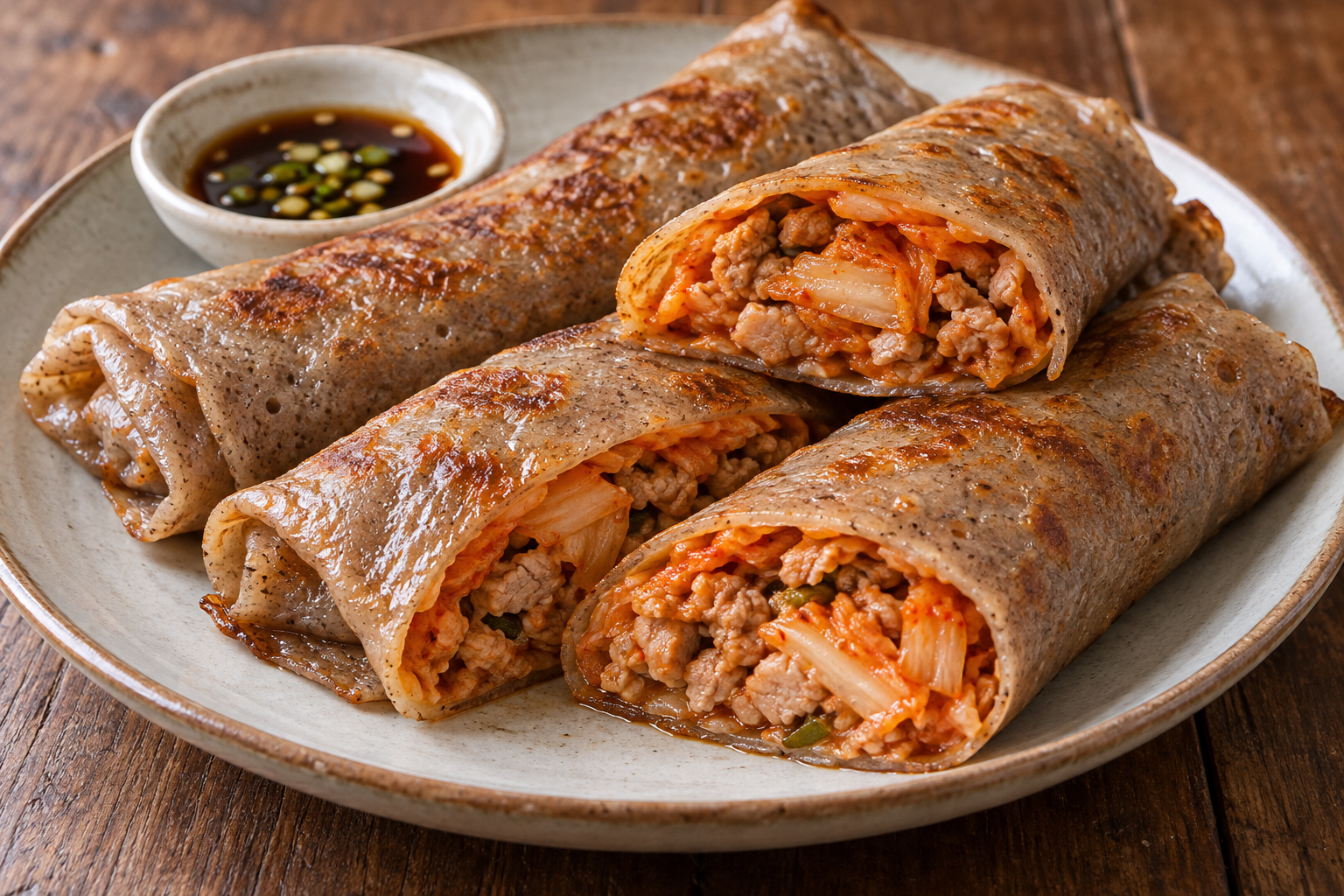
Pork and aged kimchi are first stir-fried, then simmered with vegetables and a little broth: less soupy than kimchi stew and more kimchi-forward than regular spicy pork.

A Korean soy-and-vinegar green chili pickle, adapted to refrigerate promptly instead of resting 24 hours at room temperature. Allow 3–7 days to steep cold; never treat as shelf-stable.

Crisp tofu in a skillet, then spoon uncooked soy-sesame sauce over it. Unlike braised tofu, the sauce is not simmered with the tofu.

Pat-sirutteok layers cooked azuki and damp glutinous rice flour in a large steamer instead of filling individual rice cakes. The flour needs at least two hours of chilling.

A traditional Korean warm drink made by simmering water over scorched rice left in the pot. The cooked rice itself is a separate two-serving meal.

Mild Korean porridge made by soaking skinned dried mung beans and rice, briefly toasting them in sesame oil, then simmering until soft. It differs from red bean or pine nut porridge; allow about an hour for soaking.