 AI-generated image
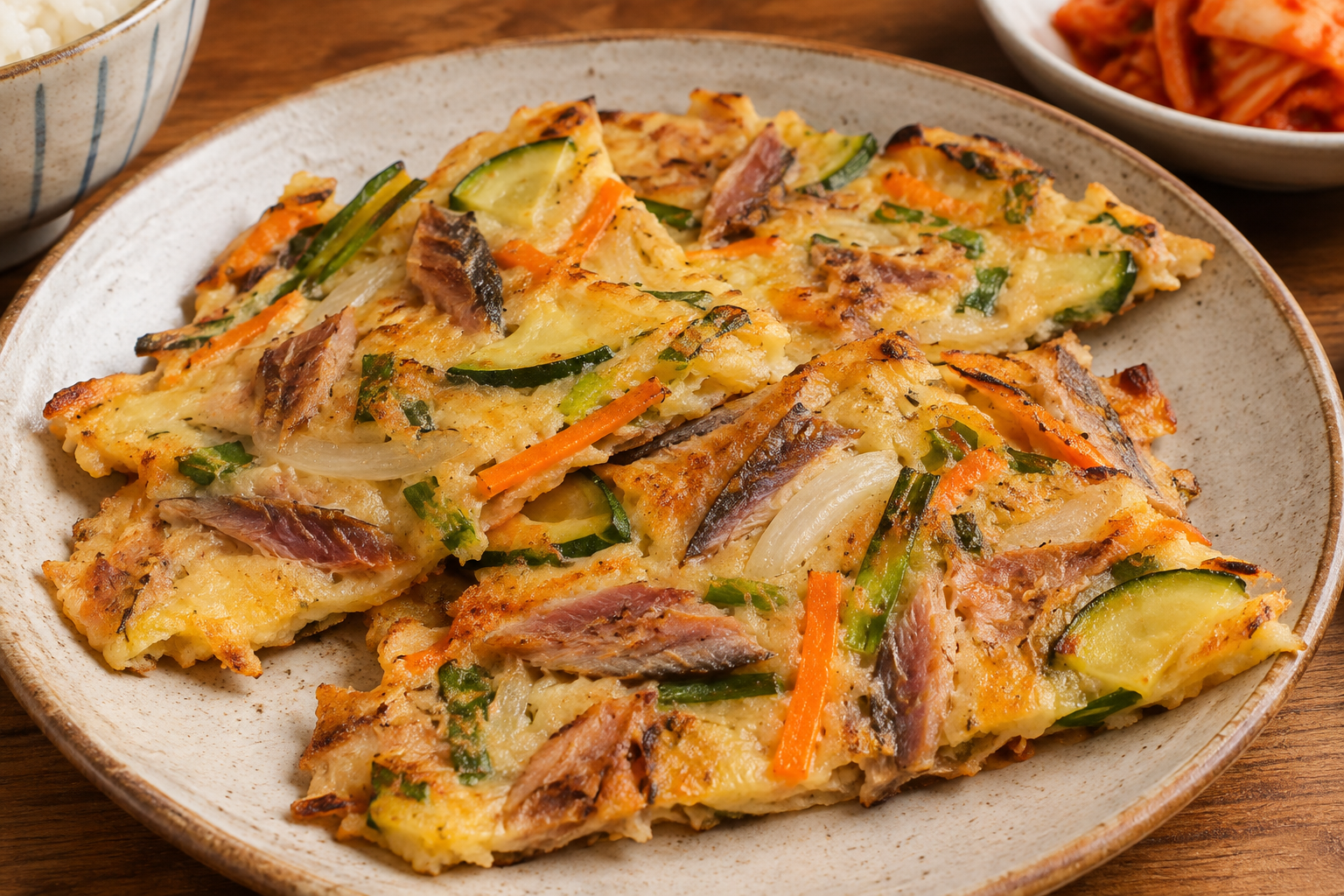
Winter Gwamegi and Vegetable Jeon (2 Servings)
A cooked home-style Korean pancake using gwamegi, dried saury or herring associated with Pohang, plus zucchini, onion, carrot and scallion. Unlike the usual seaweed wraps, this adaptation is thoroughly pan-fried; it is not claimed as the one definitive traditional recipe.
Ingredients
servings: 2 · Check ingredients
Steps
- 01
Check the storage and expiry label for 120 g cleaned gwamegi. Thaw frozen product in the refrigerator, remove remaining skin or pin bones, and chop into about 1 cm pieces. Avoid prolonged room-temperature thawing.
- 02
Wash, drain and finely chop 80 g zucchini, 70 g onion, 40 g carrot and 30 g scallion. Small pieces help the pancakes hold together.
- 03
Whisk 90 g flour, 1 egg and 1 g salt with 100 mL water added gradually until smooth and pourable.
- 04
Fold in the chopped gwamegi and vegetables, distributing the fish evenly.
- 05
Heat a skillet over medium-low and add some of the 20 mL oil. Spoon 2–3 tablespoons of batter per pancake and spread to no more than 1 cm thick. Use remaining oil for later batches.
- 06
Flip when the underside is set and golden, then cook both sides until no wet egg batter remains. Cooking time varies; where practical confirm a center temperature of at least 71°C (160°F) for the egg mixture. Lower heat if it browns too quickly.
- 07
Briefly drain on paper towel and serve warm. Refrigerate leftovers before 2 hours at room temperature, and reheat thoroughly.
Helpful source links
Before you cook
Use properly stored cleaned gwamegi and refrigerator-thaw frozen fish. Check for small bones, use clean utensils and review fish, wheat and egg allergens on the package. Cook the egg batter throughout, ideally to 71°C (160°F); promptly refrigerate leftovers within 2 hours and reheat thoroughly.
Allergens: 생선(꽁치·청어) / fish (saury or herring) / 魚(サンマ・ニシン), 밀 / wheat / 小麦, 달걀 / egg / 卵
Image & source credits
AI-generated image.
Easy meals, made simple
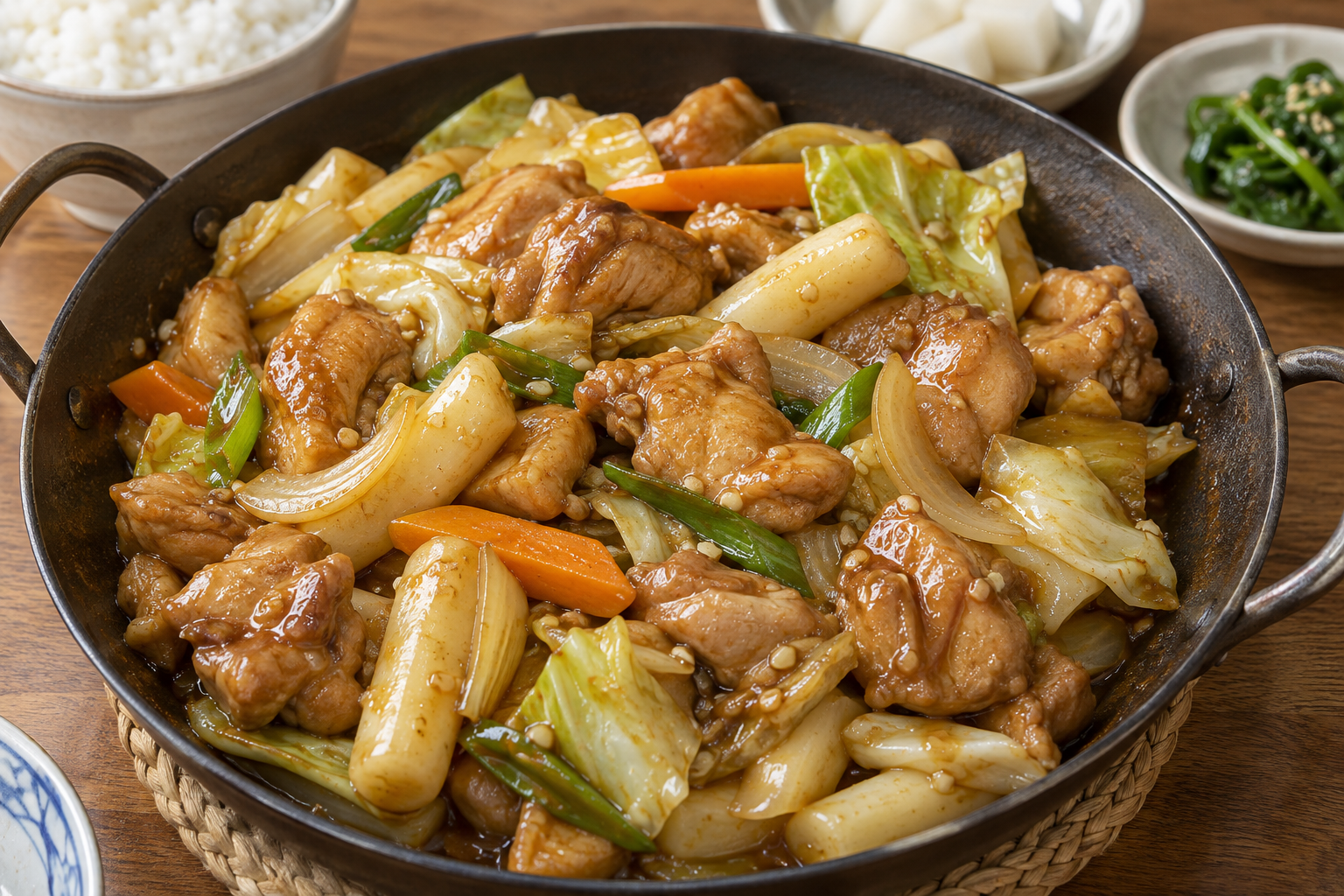
Mild Korean Soy Dakgalbi with Vegetables (2 Servings)
A mild Korean chicken stir-fry with soy sauce and garlic rather than chili paste, including cabbage and rice cakes.
Spicy Korean Squid Bossam with Radish and Soybean Sprouts (2 Servings)
Inspired by Korean ojingeo bossam: fully cooked squid stir-fried with julienned radish in a spicy sauce, finished with cooked soybean sprouts. A simplified home-style main dish.