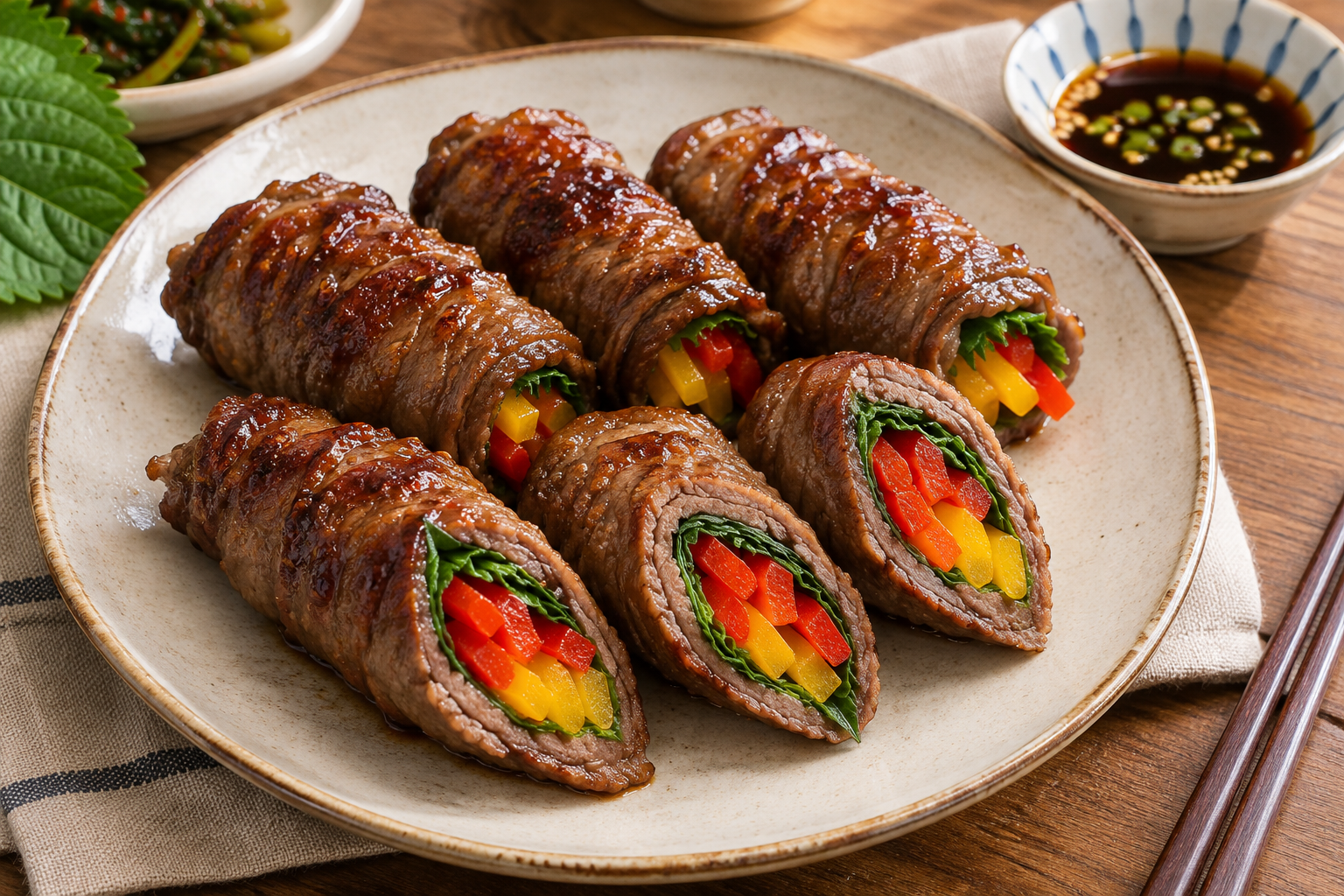
Squid bossam with crunchy radish
Public creator video demonstrating squid bossam with radish and soybean sprouts; this recipe is an independently simplified home version.
Official cooking video · 랄라제이 레시피 · YOUTUBESpicy Korean Squid Bossam with Radish and Soybean Sprouts (2 Servings)
Inspired by Korean ojingeo bossam: fully cooked squid stir-fried with julienned radish in a spicy sauce, finished with cooked soybean sprouts. A simplified home-style main dish.
Ingredients
servings: 2 · Check ingredients
Steps
- 01
Thaw frozen squid in the refrigerator. Pat 350 g cleaned squid dry and cut body and tentacles into 2–3 cm pieces. Wash utensils and the cutting board used for raw squid.
- 02
Cut 180 g radish into thin 3–4 mm strips and slice 80 g onion. Rinse 150 g soybean sprouts.
- 03
Boil the soybean sprouts for about 3–4 minutes until fully cooked, then drain. Keep them separate from utensils used for raw squid.
- 04
Mix 2 tbsp gochujang, 1 tbsp gochugaru, 1 tbsp soy sauce, 1 tbsp sugar, 1 tbsp minced garlic, and 2 tbsp water into a sauce.
- 05
Heat a frying pan over medium-high heat, add 1 tbsp oil, and stir-fry the radish and onion for 3–4 minutes until the radish begins to soften.
- 06
Add the squid and sauce and stir-fry for about 4–6 minutes, stirring until the squid is fully opaque and firm throughout. If practical, check the thickest pieces reach at least 63°C (145°F), following general seafood guidance.
- 07
Add the cooked bean sprouts, heat together for about 1 minute, then turn off the heat and stir in 1 tsp sesame oil. Serve warm with the radish and sprouts.
Helpful source links
Before you cook
Squid can cause mollusk allergy. Sauces may contain soy and wheat; sesame oil contains sesame. Check packaging. Thaw frozen squid in the refrigerator, keep raw seafood utensils separate, and cook squid fully until opaque and firm (63°C/145°F as general seafood guidance if measuring). Cook sprouts thoroughly. Refrigerate leftovers within 2 hours at 4°C/40°F or below; reheat to 74°C/165°F.
Allergens: SQUID (mollusk), SOY (soy sauce/gochujang), WHEAT (some gochujang and soy sauce brands), SESAME (sesame oil)
Image & source credits
These illustrations stand in for food photos.
Easy meals, made simple
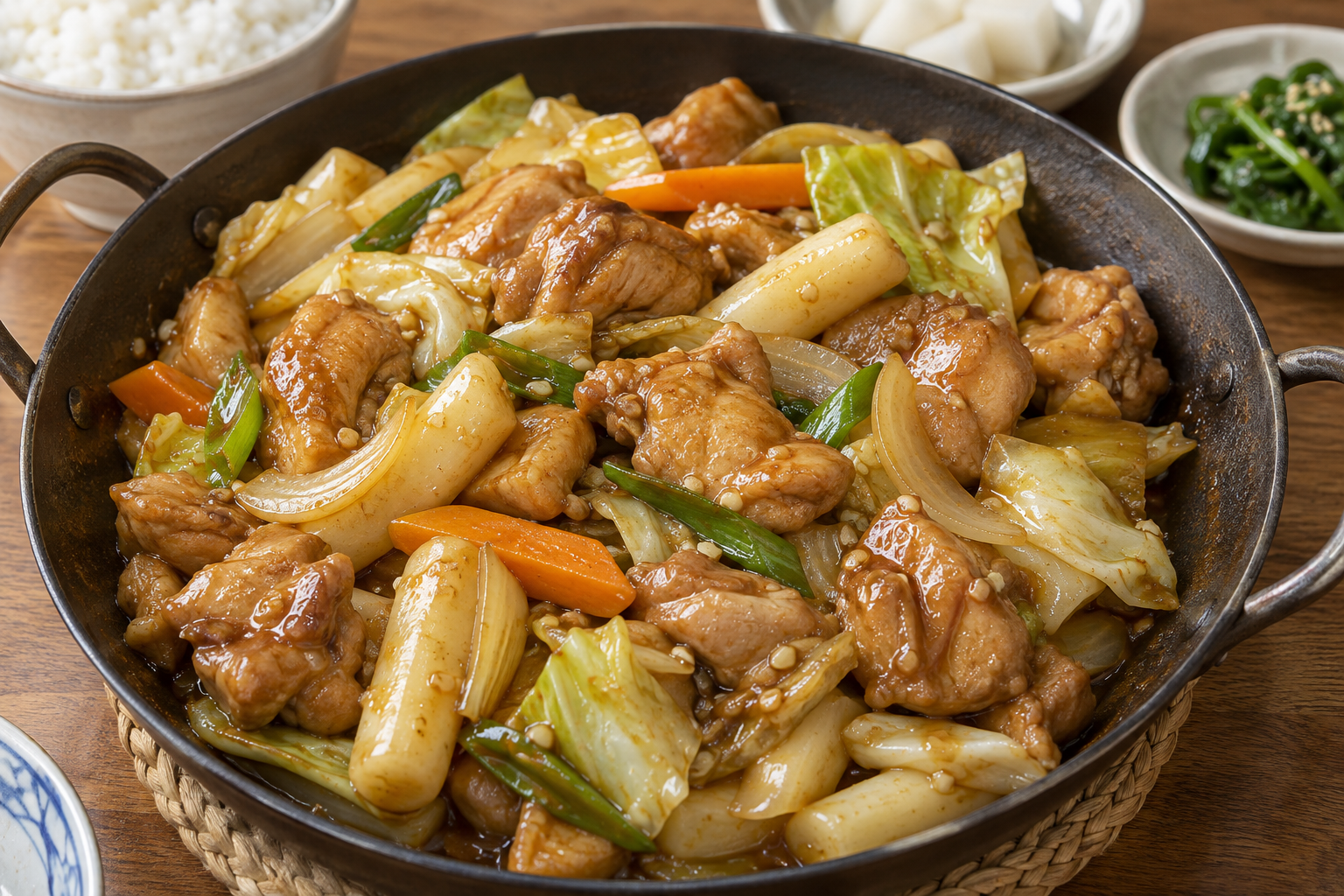
Mild Korean Soy Dakgalbi with Vegetables (2 Servings)
A mild Korean chicken stir-fry with soy sauce and garlic rather than chili paste, including cabbage and rice cakes.
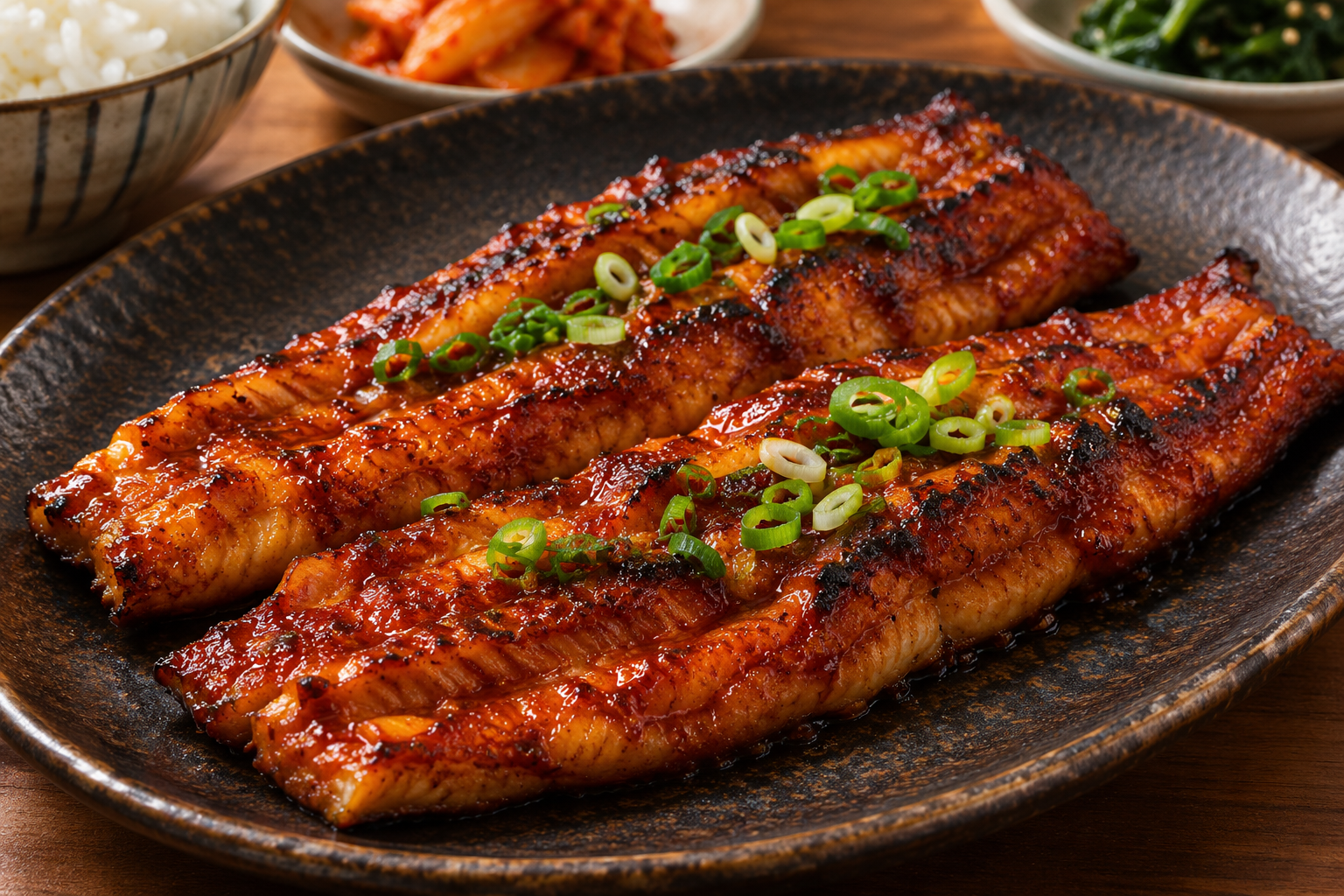
Pan-Grilled Korean Spicy Gochujang Eel (2 Servings)
This Korean-style eel dish starts with deboned eel cooked through in a skillet, then finishes with a thin layer of gochujang glaze. Buying cleaned eel makes it more approachable at home.