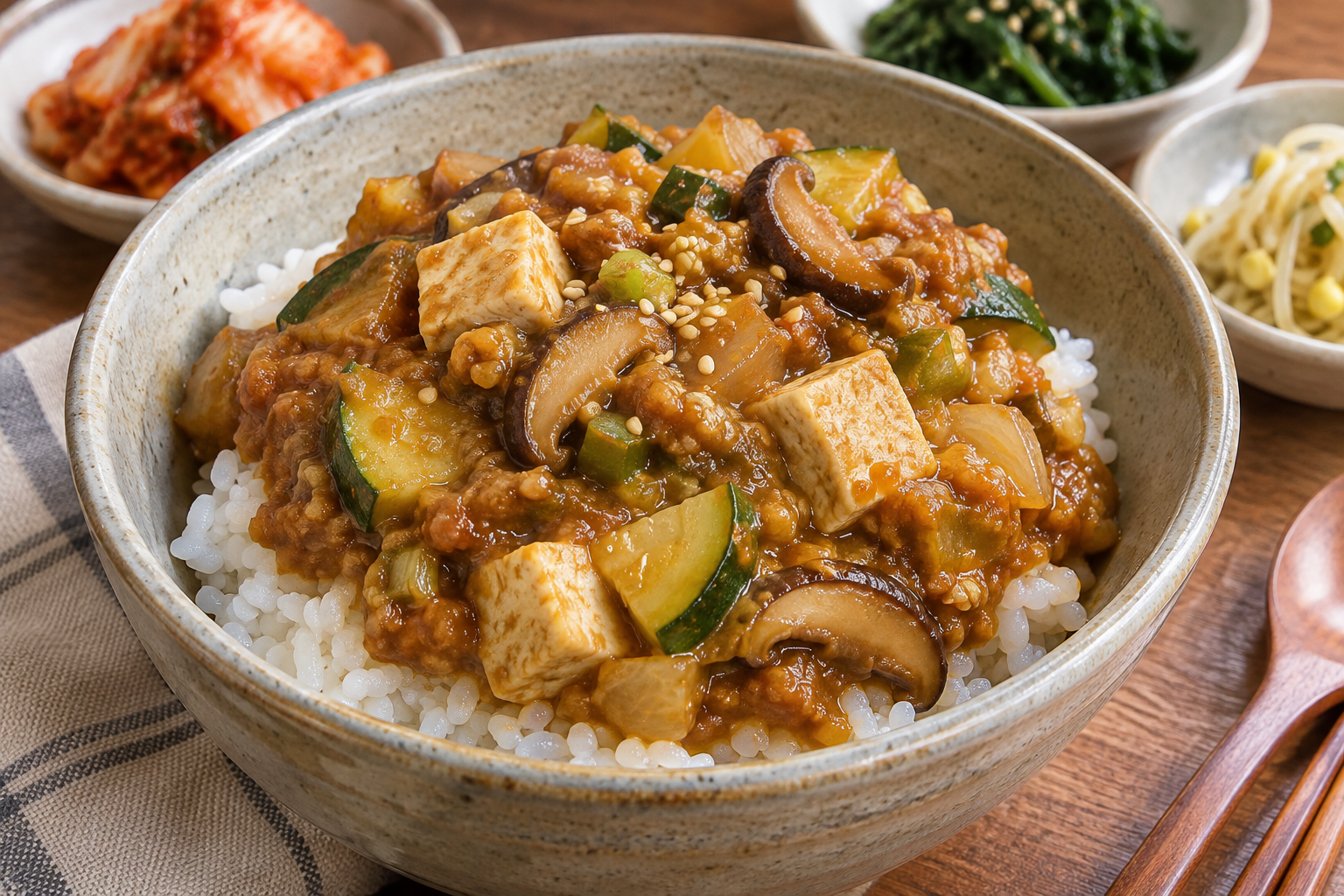
Tofu and Shiitake Gangdoenjang Bibimbap (2 Servings)
A Korean rice bowl topped with thick, savory gangdoenjang made from tofu, zucchini, onion and shiitake. This version uses neither meat nor snail.
Korean home cooking first, with dishes from around the world.

A quick one-person brunch of crisped freshly cooked rice, fully set fried egg, toasted seaweed, sesame and soy sauce. Adapted from Maangchi's gyeranbap by fully cooking the egg instead of leaving a runny yolk.

Three portions of soft, fully set Korean steamed eggs gently cooked in a small earthenware bowl with broth and scallion.

A two-portion rolled egg dish using four eggs, onion and optional bell peppers, layered in a skillet. Adapted from Maangchi, with a fully cooked center check.

Three servings of creamy Korean-style mashed potato salad with thoroughly cooked eggs and crunchy cucumber.

A simple Korean seaweed soup made with drained canned tuna and dried miyeok, without beef or shellfish. Add the tuna near the end so it stays in pieces, and adjust the soup soy sauce to taste.

A home variation of Korean street hotteok: a yeasted pancake stuffed with ready-to-eat sweet red-bean paste instead of the usual brown-sugar filling. It keeps the pan-fried dough but uses a distinct filling.

Make three Korean street-style egg breads in shallow oven-safe mini pans, each topped with a whole egg. No special vendor pan is needed.

A traditional Korean side dish of dried kelp brushed with rice paste, dried thoroughly and fried. The crisp rice coating distinguishes it from plain fried kelp.

A Daejeon regional side dish of soybeans coated with glutinous rice flour, fried and tossed in a sweet-salty soy glaze. Soak beans in the refrigerator for 8–10 hours the previous night; this is outside the listed prep/cook times. Steaming is extended beyond the source recipe for thorough cooking.